
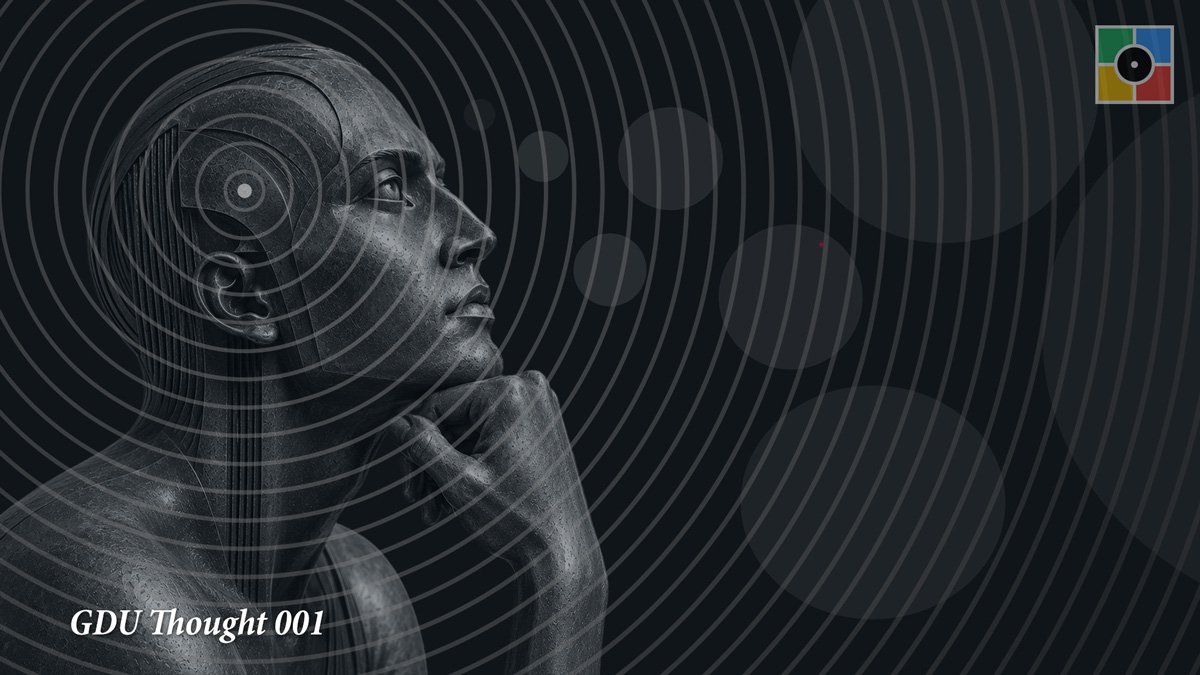
The First ARTEK Design Thought
Before you learn Illustrator…
Before you install Photoshop…
Before you open Canva…
Before Artificial Intelligence creates its first image for you…
I want to ask you one simple question.
Have you ever tried to make a perfectly round chapati?
It may sound like a strange question in a graphic design article.
But stay with me.
One day you will understand why it may be one of the most important questions a designer can ask.
We Have Been Looking in the Wrong Direction
Today, when people hear the words Graphic Design, they immediately think about software.
Illustrator.
Photoshop.
CorelDRAW.
Canva.
Figma.
AI.
Many believe that becoming a designer simply means learning these tools.
I have never believed that.
Not even when I first started my own journey.
To me, software has always been exactly what a brush is to a painter, what a pen is to a writer, or what a camera is to a photographer.
A tool.
Nothing more.
Nothing less.
Tools help us express ideas.
They do not create ideas.
That is why graphic design never begins inside a computer.
It begins inside a human mind.
Every Design Begins Before It Becomes Visible
Look around you.
Every building you see…
Every book you read…
Every road sign you follow…
Every product package you pick up…
Every website you visit…
Every logo you recognize…
Every advertisement that catches your attention…
All of them existed as invisible thoughts before they became visible objects.
Every human creation begins with observation.
Then comes understanding.
Then thinking.
Then imagination.
Then decisions.
Only after all of this does something become visible.
Graphic design follows exactly the same journey.
Visible design is simply the final chapter of an invisible process.
You Were Already Designing as a Child
Think back to your childhood.
Long before you knew the words Graphic Design…
you were already practicing it.
When you drew on a wall with chalk.
When you tried to color inside the lines.
When you folded a paper airplane.
When you arranged your school books neatly.
When you selected your favourite colour.
When you wrote your name carefully for the first time.
Nobody called it graphic design.
But your mind was already learning balance…
order…
proportion…
comparison…
observation…
and communication.
You were already developing the designer within you.
You simply did not know it yet.
My First Graphic Design Teacher
One of my earliest memories is not of a computer.
It is of watching a signboard painter sitting beside a roadside shop.
Slowly…
carefully…
patiently…
He transformed a plain wooden board into something that could communicate with thousands of strangers.
At that age, I was not studying typography.
I was simply watching.
But today I realized that I was learning one of the greatest lessons in graphic design.
Communication is built one thoughtful decision at a time.
Later came school drawings…
Rangoli during festivals…
Clay sculptures for Ganesh Chaturthi…
Portraits…
Sketches…
Even making a simple sundial on a wall using nothing more than sunlight and a stick.
None of these were called graphic design.
Yet every one of them taught me to observe, measure, compare, improve and communicate.
Only many years later did I understand that graphic design had been quietly teaching me long before I ever learned its name.
The Lesson Hidden Inside a Chapati
Years later, while living away from home, I cooked my own meals.
Every time I rolled a chapati, I wanted it to become perfectly round.
Every time I cut vegetables, I wanted them to be clean and consistent.
Every time I arranged food on a plate, I wanted it to look balanced.
Someone may call this cooking.
I saw something more.
I saw observation.
I saw proportion.
I saw balance.
I saw attention to detail.
I saw continuous improvement.
These are the same principles that create meaningful graphic design.
Graphic design is not limited to paper or screens.
It is a way of thinking.
A way of observing.
A way of doing every piece of work with care.
The Biggest Misunderstanding
For more than thirty years, I have taught students from different backgrounds.
One experience has stayed with me.
A professional photographer once came to join my course.
He had already spent a large amount of money learning photography and Photoshop from a well-known studio.
He confidently told me,
“I already know Photoshop. What more can you teach me?”
I asked him one simple question.
“How do you scientifically decide whether a scanned photograph is technically correct?”
He could not answer.
He knew the software.
But he did not yet understand the image.
That day reminded me of something I have never forgotten.
Knowing every button is not the same as understanding what you are creating.
Software knowledge and design understanding are not the same thing.
The World Before Graphic Design Had a Name
Long before computers…
Long before printing…
Long before design schools…
People were already communicating visually.
Cave paintings.
Temple carvings.
Maps.
Symbols.
Handwritten manuscripts.
Rangoli.
Traditional art.
Shop signs.
Human beings have always organised information visually.
Graphic design did not create visual communication.
Human communication created graphic design.
The profession came later.
Human ability came first.
The Age of AI Changes Nothing Important
Today we are surrounded by Artificial Intelligence.
AI can generate images in seconds.
It can suggest layouts.
It can remove backgrounds.
It can write prompts.
It can create hundreds of variations almost instantly.
These are remarkable achievements.
I use AI.
I encourage my students to use AI.
But I also remind them of one important truth.
AI can generate possibilities.
Only humans can decide responsibility.
AI can imitate patterns.
Only humans truly understand people.
Technology will continue to change.
Software versions will continue to change.
Interfaces will continue to change.
But observation…
thinking…
communication…
judgement…
and human understanding…
will remain timeless.
Why ARTEK Exists
I did not create ARTEK to teach software.
Software can be learned from countless tutorials.
Buttons can be memorised.
Shortcuts can be searched.
Artificial Intelligence can answer technical questions in seconds.
ARTEK exists for something much deeper.
To help people observe.
To help people think.
To help people communicate with clarity.
To help people discover that the most powerful design tool has never been inside a computer.
It has always been inside themselves.
Before You Continue Your Design Journey…
If this is the beginning of your graphic design journey, I invite you to pause for a moment.
Forget the software.
Forget the versions.
Forget the shortcuts.
Forget the trends.
Instead…
Observe the world around you.
Notice how people communicate without speaking.
Notice how colours influence emotions.
Notice how space creates clarity.
Notice how a simple sign can guide thousands of people.
Notice how every meaningful human creation begins as an invisible thought before it becomes visible reality.
That is where graphic design begins.
You do not become a designer by installing software.
You become a designer by learning to observe the world differently.
Because Graphic Design is not outside you.
It is already inside you.