
AI can give you an answer in seconds.
It can explain a difficult topic.
It can summarise a long book.
It can show you examples.
It can create a learning plan.
It can even teach you something step by step.
Everything feels faster now.
But there is one thing AI cannot make instant.
Understanding.
And that is where real learning begins.
Fast Information is Not Deep Understanding
Imagine a student learning graphic design.
They ask AI:
“How do I create a professional logo?”
AI can answer immediately.
It may explain shapes.
Typography.
Colour.
Balance.
Spacing.
It may show examples.
It may even suggest a complete process.
The student now has a lot of information.
But does the student understand logo design?
Not necessarily.
Because knowing the steps is not the same as understanding the reason behind the steps.
A student may know what to do.
But still not know why to do it.
That difference is important.
Information can arrive quickly.
Understanding takes time.
What Does Understanding Really Mean?
Understanding is more than remembering an answer.
It means you can look at something and make sense of it.
You can explain it in your own words.
You can recognise when to use it.
You can recognise when not to use it.
You can apply it to a new situation.
And most importantly…
You can make a decision without simply copying an example.
That is understanding.
For example, a student may learn that contrast is important in graphic design.
They may remember the definition.
They may even ask AI for ten examples of contrast.
But real understanding comes when they can look at a design and say:
“Something is not working here because there is not enough contrast.”
They may not even know the technical term at that moment.
But they can see the problem.
That is understanding.
Understanding Takes Time
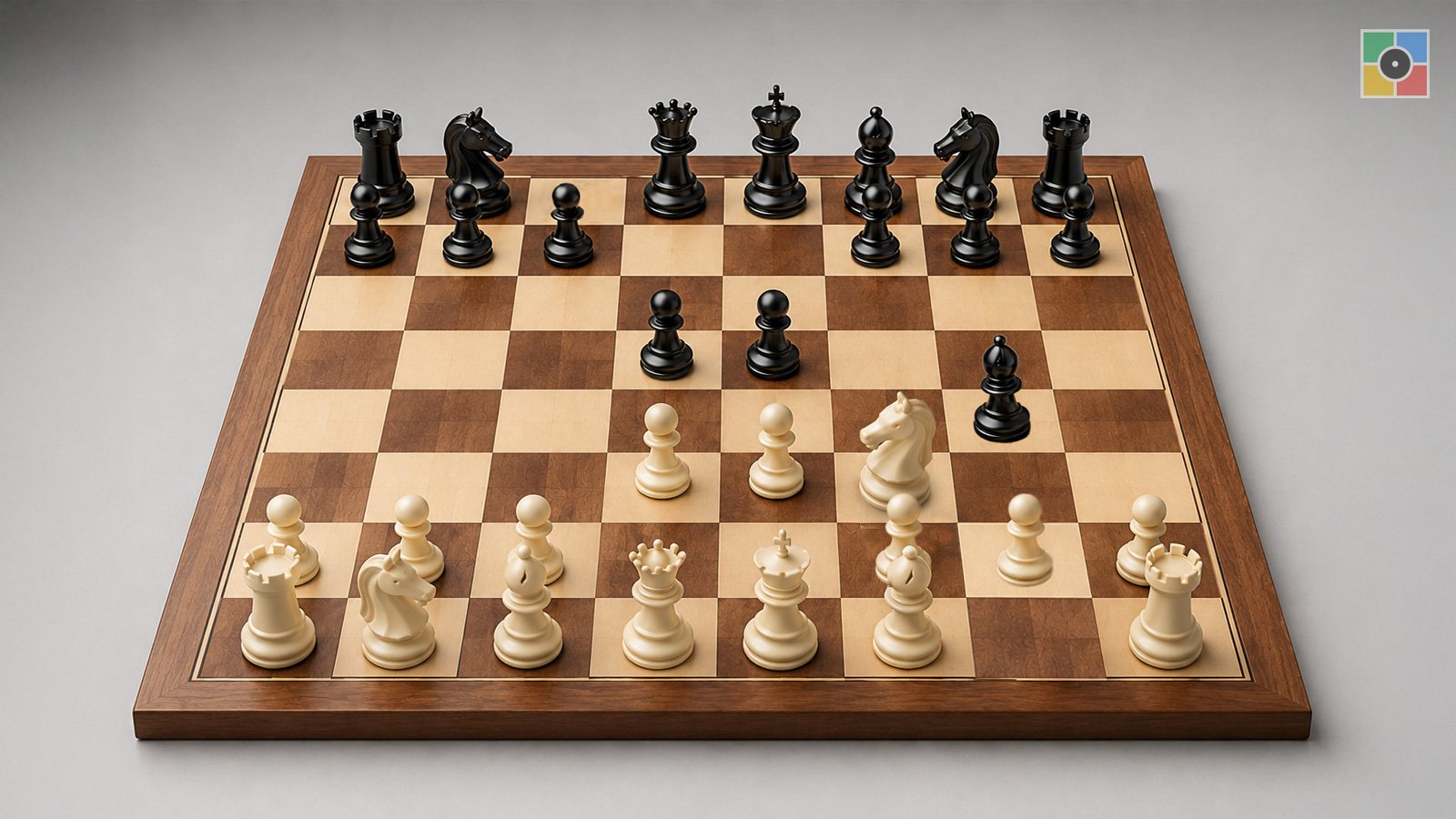
Think about learning chess.
Learning the rules may take a little time.
But learning to understand and play chess well can take years.
You can learn how the pieces move in a short time.
You can learn the rules.
You can remember how the knight moves.
You can understand what check means.
You can even memorise a few opening moves.
But does that mean you understand chess?
Not really.
You may know how every piece moves…
But when the game begins, you have to decide what to do.
You have to look at the whole board.
You have to understand your opponent’s intention.
You have to recognise patterns.
You have to think several moves ahead.
You have to make decisions.
And sometimes…
You have to understand why a move that looks good is actually a bad move.
Learning the rules may take a little time.
But learning to understand and play chess well can take years.
That is the difference between knowing something and understanding it.
The same thing happens in graphic design.
You can learn what alignment means.
You can learn what contrast means.
You can learn what hierarchy means.
But understanding design means being able to see these things when they appear in a real design.
And that ability grows through observation, practice and experience.
AI Can Make Learning Faster
This does not mean AI is a problem.
Quite the opposite.
AI can be an incredibly powerful learning partner.
If you do not understand something, you can ask again.
You can ask for a simpler explanation.
You can ask for another example.
You can ask AI to explain the same idea from a different point of view.
You can practise with questions.
You can get feedback.
You can explore a subject much faster than before.
This is a major advantage.
A learner today has access to something previous generations never had at this scale.
A learning partner that is available whenever they need help.
But there is a difference between making learning easier and removing the learning process.
AI should reduce unnecessary difficulty.
It should not remove useful difficulty.
Because some difficulty is necessary for understanding.
The Value of Experience
Think about learning to swim.
You can read a book about swimming.
You can study every page.
You can memorise every instruction.
You can understand how the hands should move.
You can understand how the legs should move.
You can learn how breathing works.
You may even be able to explain the entire process to somebody else.
But if you have never entered the water…
You still do not know how to swim.
The real learning begins when you enter the water.
You experience the movement.
You lose balance.
You try again.
You learn how your body responds.
You make mistakes.
You adjust your movements.
Slowly…
Your body begins to understand what your mind had only read about.
That is experience.
And experience cannot simply be downloaded.
This is true for graphic design too.
You can read about typography.
You can watch videos about colour.
You can ask AI about composition.
You can study hundreds of beautiful designs.
But eventually…
You have to open a blank page.
You have to make decisions.
You have to create something.
You have to make mistakes.
You have to look at your work and ask:
“Why does this not feel right?”
Then you try again.
That process may feel slow.
But that is where understanding becomes real.
AI Can Explain. You Still Have to Experience.
AI can explain how to swim.
It can explain how to play chess.
It can explain graphic design.
It can give you examples.
It can answer your questions.
It can even give you feedback.
But AI cannot enter the water for you.
It cannot play the game for you and give you the experience of every decision.
And it cannot sit beside you while you struggle with your first hundred design layouts.
It can help you learn.
But the experience still has to be yours.
That is why we should not be afraid of the time learning takes.
Some things are slow because they are deep.
And some understanding can only come through experience.
The Difference Between Knowing and Understanding
There is a simple test.
Ask yourself:
“Can I explain it?”
That tells you something.
Then ask:
“Can I use it?”
That tells you more.
Then ask:
“Can I use it in a new situation?”
Now you are getting closer to understanding.
And finally ask:
“Can I explain why I made this choice?”
That is a deeper level.
This is especially important in graphic design.
A designer makes hundreds of small decisions.
Why this colour?
Why this typeface?
Why this size?
Why this spacing?
Why this position?
Why this image?
Why this shape?
Why this much white space?
Software can help you make these changes.
AI can suggest alternatives.
But the designer must understand the reason behind the decision.
Otherwise, design becomes a collection of buttons, templates and suggestions.
The Danger of Learning Too Fast
Speed sounds attractive.
We want faster software.
Faster computers.
Faster internet.
Faster AI.
Faster results.
But sometimes speed creates an illusion.
We feel that because we reached the answer quickly…
We must have learned quickly.
That is not always true.
You can watch a ten-minute tutorial.
You can understand every word.
You can follow every step.
At the end, you may feel:
“I know this.”
Then close the tutorial.
Open a blank document.
And suddenly…
You do not know where to begin.
What happened?
The information was there.
But the understanding was not yet strong enough.
This is why collecting tutorials does not automatically create skill.
And collecting AI answers does not automatically create knowledge.
Learning requires interaction.
Thinking.
Practice.
Mistakes.
Questions.
Reflection.
Time.
A Designer Cannot Copy Understanding
Imagine two students.
Both ask AI the same question.
Both receive the same answer.
Both watch the same examples.
Both use the same software.
But one student spends the next week practising.
They try different examples.
They make mistakes.
They compare results.
They ask better questions.
They go back and study the principle again.
The other student keeps collecting more information.
Another tutorial.
Another prompt.
Another example.
Another shortcut.
After some time, they may have almost the same amount of information.
But their understanding will be very different.
Why?
Because understanding is not something you collect.
It is something you build.
AI Can Give You Ten Examples. You Still Need to See the Pattern.
This is one of the most powerful things about learning with AI.
You can ask for examples.
And examples are useful.
But examples alone are not understanding.
Suppose AI shows you twenty good layouts.
You can admire them.
You can study them.
You can even copy them.
But the important question is:
What do these twenty designs have in common?
Maybe they all have clear hierarchy.
Maybe the typography is controlled.
Maybe the spacing is intentional.
Maybe the contrast guides attention.
Maybe unnecessary elements have been removed.
Finding that common principle is more valuable than memorising the twenty designs.
Because once you understand the principle…
You can create the twenty-first design.
That is the real power of learning.
Understanding Creates Independence
This is where the right use of AI becomes important.
If you use AI only to give you answers…
You may slowly become dependent on answers.
But if you use AI to help you understand…
You become more independent.
There is a big difference.
Instead of asking:
“Give me the answer.”
You can ask:
“Help me understand why this works.”
Instead of:
“Make this design for me.”
Ask:
“What design principles should I consider here?”
Instead of:
“Tell me which option is best.”
Ask:
“What are the strengths and weaknesses of these options?”
These questions change the role of AI.
AI stops being a shortcut.
It becomes a learning partner.
And that is a much healthier relationship with technology.
Do Not Be Afraid of Slow Learning
We sometimes think slow learning means weak learning.
It does not.
A tree does not become strong because it grows quickly for one week.
It becomes strong because it keeps growing.
Learning is similar.
Some concepts can be understood quickly.
Some require repetition.
Some require practice.
Some require failure.
Some become clear only after you have gained more experience.
And sometimes…
You understand something years later that you could not understand when you first learned it.
That does not mean you were a bad learner.
It means you were not ready for that understanding yet.
Experience had to catch up with information.
This Matters Even More in the Age of AI
Before AI, getting information was often the difficult part.
You had to search.
Find a book.
Watch a demonstration.
Ask a teacher.
Find someone who knew the answer.
Today, information is much easier to access.
That changes the challenge.
The question is no longer only:
“Where can I find the information?”
It is increasingly:
“What should I do with all this information?”
This is why thinking becomes more important.
Observation becomes more important.
Questions become more important.
Judgement becomes more important.
And understanding becomes more valuable.
When information becomes cheap and fast…
The ability to understand it becomes precious.
A Student Should Not Be Afraid of Not Knowing
There is another important lesson here.
Do not be embarrassed when you do not understand something.
Say:
“I don’t understand this yet.”
That small word matters.
Yet.
It means you are still learning.
Ask again.
Try another example.
Make a small exercise.
Explain it to someone else.
Come back tomorrow.
Ask AI to simplify it.
Ask a teacher.
Read about it.
Practise it.
Understanding often arrives slowly.
But when it arrives…
It stays.
The Best Use of AI is Not to Finish Learning Faster
The best use of AI is not always:
“How quickly can I finish this?”
Sometimes the better question is:
“How deeply can I understand this?”
That changes everything.
You may use AI to explain a concept in thirty seconds.
Then spend thirty minutes practising it.
That is a good use of AI.
You may use AI to give you ten examples.
Then spend an hour finding the principle behind them.
That is a good use of AI.
You may use AI to identify your mistake.
Then solve the problem yourself.
That is a good use of AI.
The goal is not to make yourself unnecessary.
The goal is to make yourself better.
Fast Tools Need Slow Thinking
This may be one of the most important lessons for designers.
Our tools are becoming incredibly fast.
AI can generate ideas.
Software can automate tasks.
Templates can create layouts.
One click can produce what once took hours.
But faster tools do not automatically create better decisions.
In fact…
The faster the tool becomes…
The more carefully we may need to think.
Because when making something becomes easy…
Choosing what should be made becomes more important.
When generating ten options becomes easy…
Choosing the right option becomes more important.
When creating an image becomes easy…
Understanding what the image should communicate becomes more important.
Technology can accelerate production.
Understanding still guides direction.
Learning Has Its Own Speed
Every learner has a different journey.
Some ideas come quickly.
Some take days.
Some take months.
Some take years.
Do not compare the speed of your understanding with somebody else’s.
A person may learn a software command in one day.
But another person may spend a year developing a deeper understanding of design.
The second person may appear slower.
But they may be building a stronger foundation.
And foundations are not very exciting while they are being built.
You notice them later…
When the structure becomes strong.
AI Can Speed Up the Journey. It Cannot Walk It for You.
This is the balance we need.
Use AI.
Ask questions.
Explore ideas.
Get explanations.
Find examples.
Practise with it.
Let it challenge you.
Let it help you see what you missed.
But do not confuse speed with mastery.
Do not confuse information with understanding.
Do not confuse an explanation with experience.
And do not confuse a fast answer with deep learning.
Your learning still needs your attention.
Your curiosity.
Your practice.
Your mistakes.
Your reflection.
Your time.
Because these are not obstacles to understanding.
They are part of understanding.
Final Thought
AI is changing the speed of learning.
That is powerful.
We should use it.
We should learn with it.
We should take advantage of it.
But we should also remember something very simple:
Not everything valuable in learning can be made faster.
Understanding needs time.
A principle needs to be tested.
A skill needs to be practised.
A mistake needs to be experienced.
An idea needs to be questioned.
And knowledge needs to become part of the way you think.
AI can bring information to you faster than ever before.
But you still have to stop…
Think…
Practise…
Connect the ideas…
And understand.
Because learning is not about how quickly information reaches your mind.
It is about how deeply it becomes part of your thinking.
One Memorable Quote
“AI can make learning faster.
Only understanding can make learning deeper.”
Practical Takeaway
The next time AI gives you a quick answer, do not immediately move to the next question.
Stop for a moment.
Ask yourself:
“Do I understand this, or do I only know the answer?”
Then try to explain it in your own words.
Use it in a practical example.
And ask yourself why it works.
That small pause can turn information into understanding.
One Thought to Remember
AI is fast.
It can give you information in seconds.
It can explain.
It can demonstrate.
It can suggest.
It can help you learn.
But understanding has its own speed.
Do not be afraid of taking time to understand something.
Because the goal of learning is not to collect answers faster.
The goal is to become someone who can think, understand and make decisions independently.
Use AI to learn faster.
But give yourself enough time to understand deeply.
Because **AI is fast.
Understanding takes time.**
Thank you for reading this GDU Thought.
If this thought made you think differently, you’ll find many more like this in the GDU Thoughts series.
Because Graphic Design is not just about software or AI.
It is about thinking.
And thinking is unlimited.